
There is a phrase that often circulates among experienced politicians, usually said in a tone of resignation: those who govern well don't have votes. At first glance, it just seems like a manifestation of cynicism. After all, it would be natural to expect voters to reward those in government who better manage public resources, deliver quality services and think about the future. However, you only need to look at contemporary politics to see that this maxim contains an uncomfortable truth. In many cases, the greater the responsibility of a ruler, the lesser his ability to produce immediate electoral results.
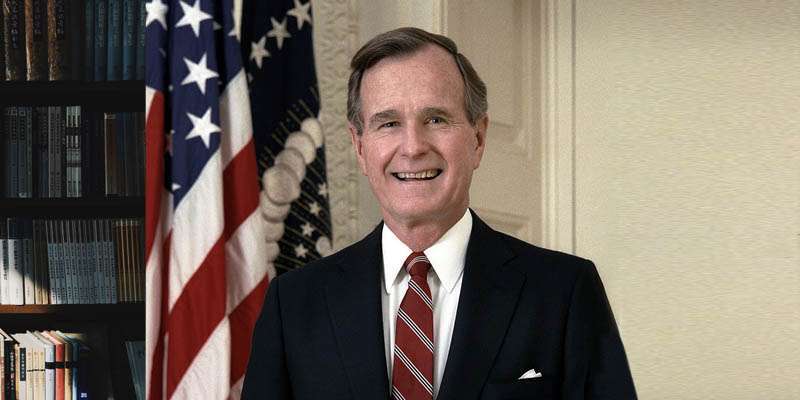
George Bush Sr. was perhaps the greatest example of this paradox, he consolidated the unipolar order after the end of the Cold War, obtained military victories... he did everything that would be expected of a republican president at the time, his mistake perhaps was governing too well.
This apparent contradiction is not new. Aristotle already distinguished the statesman from the demagogue. While the first guided his actions towards the common good, even when this required difficult decisions, the second sought to please the crowd by exploring their passions and momentary desires. For the Greek philosopher, politics was a practical art based on prudence, and not a permanent popularity contest. The virtuous ruler needed, first of all, to do what was right for the city, even if it cost him prestige.
Centuries later, Niccolo Machiavelli reached a similar conclusion via another path. In The Prince, he argues that the stability of the State often requires unpopular decisions. A responsible government cannot manage just to satisfy immediate expectations. In certain circumstances, it needs to go against organized interests, contain expenses, face privileges and take measures whose benefits will only be realized years later. Politics, in this sense, requires courage to endure unpopularity.
The problem is that contemporary democracy has started to operate according to a different logic. Alexis de Tocqueville, when analyzing American democracy in the 19th century, warned of the risk of tyranny of the majority. When every decision becomes guided exclusively by the search for popular approval, the long-term horizon disappears. The ruler stops asking what should be done and starts asking only what generates the most votes.
In the 20th century, Joseph Schumpeter deepened this perception by defining democracy as a competition between elites to win the electorate. Instead of an arena dedicated to the rational pursuit of the common good, politics becomes a permanent dispute for popular support. The public debate starts to privilege slogans, emotions and short-term promises, while structural reforms, which require present sacrifices in exchange for future benefits, become electorally disadvantageous.
It is precisely in this environment that populism thrives. Whether right-wing or left-wing, the populist offers simple answers to complex problems. It promises immediate benefits, identifies convenient culprits and constructs a narrative according to which any institutional or fiscal limit represents an obstacle imposed by enemies of the people. The result is usually known: uncontrolled expansion of public spending, increased debt, deterioration of institutions and gradual loss of the State's ability to fulfill its essential functions.
Fiscal responsibility is perhaps the clearest example of this dilemma. Adjusting public accounts rarely produces applause. Reducing expenses, reforming inefficient structures or eliminating privileges generates almost inevitable political conflicts. However, ignoring these problems only postpones the crisis. James Buchanan recalled that persistent deficits represent a way of transferring the cost of present decisions to future generations. In other words, the irresponsible government distributes benefits now while sending the bill to those who don't even vote yet.
Friedrich Hayek added that free societies depend on governments subject to rules, and not on leaders who use the State to meet immediate demands. When politics abandons institutional limits in the name of popularity, space is created for the gradual erosion of freedom and economic stability. It is no coincidence that countries marked by recurrent populism also live with high inflation, legal uncertainty and low economic growth.
Anthony Downs offered another important piece to understanding this phenomenon. In his economic theory of democracy, he argues that a large proportion of voters have limited information about public policies. As a consequence, electoral decisions tend to be influenced by immediate perceptions of the economy, simplified narratives and easily understandable promises. Reforms that avoid a future crisis rarely produce the same emotional impact as benefits distributed in the present.
Last edited 18 minutes ago
Perhaps this is exactly why so many responsible leaders end their terms less popular than their campaign speeches would suggest. The voter immediately notices the cut in a subsidy, but it is difficult for them to see the fiscal crisis that has stopped happening. He feels the discomfort of administrative reform, but rarely attributes it to the gradual improvement of the State's capacity. Good management is silent. Populism is making noise.
None of this means defending less democracy. The challenge is not to reduce popular participation, but to strengthen the conditions for democracy to produce better choices. This involves civic education, transparency, independent institutions, fiscal responsibility and a political culture capable of valuing lasting results above immediate gratification. Solid democracies do not survive solely on free elections; They also survive on the willingness of citizens to reward those who govern with the next generation in mind, and not just the next election.
Therefore, perhaps it is more correct to say that those who govern well often win fewer votes than those who promise well. Democratic politics will always coexist with this tension. It will be up to voters to decide whether they want leaders specialized in winning elections or statesmen capable of building a future. History shows that these two qualities do not always go together.
Bibliographic References.
ARISTOTLE. The Politics. Translated by Mário da Gama Kury. 3rd ed. Brasília: Editora Universidade de Brasília, 1997.
BUCHANAN, James M. Public Finance in Democratic Process: Fiscal Institutions and Individual Choice. Chapel Hill: The University of North Carolina Press, 1987.
DOWNS, Anthony. An economic theory of democracy. Translated by Sandra Guardini Vasconcelos. São Paulo: EDUSP, 1999.
HAYEK, Friedrich A. von. The path of servitude. Translated by Anna Maria Capovilla, José Ítalo Stelle and Lya Luft. 6. ed. São Paulo: LCR, 2010.
MACHIAVELLI, Niccolò. The Prince. Translated by Lívio Xavier. São Paulo: Edipro, 2019.
SCHUMPETER, Joseph A. Capitalism, socialism and democracy. Translation by Ruy Jungmann. Rio de Janeiro: Cultural Fund, 1961.
TOCQUEVILLE, Alexis de. Democracy in America. Translated by Neil Ribeiro da Silva. 2nd ed. São Paulo: Martins Fontes, 2005.
Disclaimer: The opinions, analyses, and interpretations expressed in this article are the sole responsibility of its author(s) and do not necessarily reflect the editorial position of Hermenêutica Política.
Subscribe to our Newsletter
Fill in your details and choose the sections you want to receive.

Rodrigo Bueno
Rodrigo Bueno é bacharel em Relações Internacionais pelo Instituto Brasileiro de Mercados e Capitais (IBMEC). Pós graduado em Inteligência e Contra Inteligência pela Associação Brasileira de Estudos de Inteligência e Contra Inteligência (ABEIC/CSABE). Mestrando em Política Internacional ( PUC Minas ). Seu foco principal de estudos é a área da Política Internacional, Filosofia Política e Ciência Política. Na midia já publicou na Gazeta do Povo e no Instituto Mises Brasil. Publicou artigos sobre a História da Política Internacional, Segurança Nuclear, o TNP, e os fundamentos ontológicos e epistemológicos da Ordem Mundial. Publicou artigos pela Editora Dialética sobre o pensamento de Raymond Aron, Samuel Huntington e a História do Conservadorismo. Sócio-Fundador e Membro do corpo editorial do Grupo Hermenêutica Política desde 2020. Analista Internacional e sócio do canal Factual Nacional Lattes: http://lattes.cnpq.br/3687844525565262. ORCID: orcid.org/0009-0003-4507-4943. Researchgate: https://www.researchgate.net/profile/Rodrigo-Coimbra-7

Rafael Emery Gripp Pascoal
Rafael Gripp é cientista político, pós-graduado em Políticas Públicas, Filosofia, Política e Economia, analista político dedicado à análise das instituições, da representação democrática e do pensamento político contemporâneo e colaborador do projeto Hermenêutica Política.


